
WHILE YOU SHOP
Shop savvy. Compare products and prices. Check food labels.
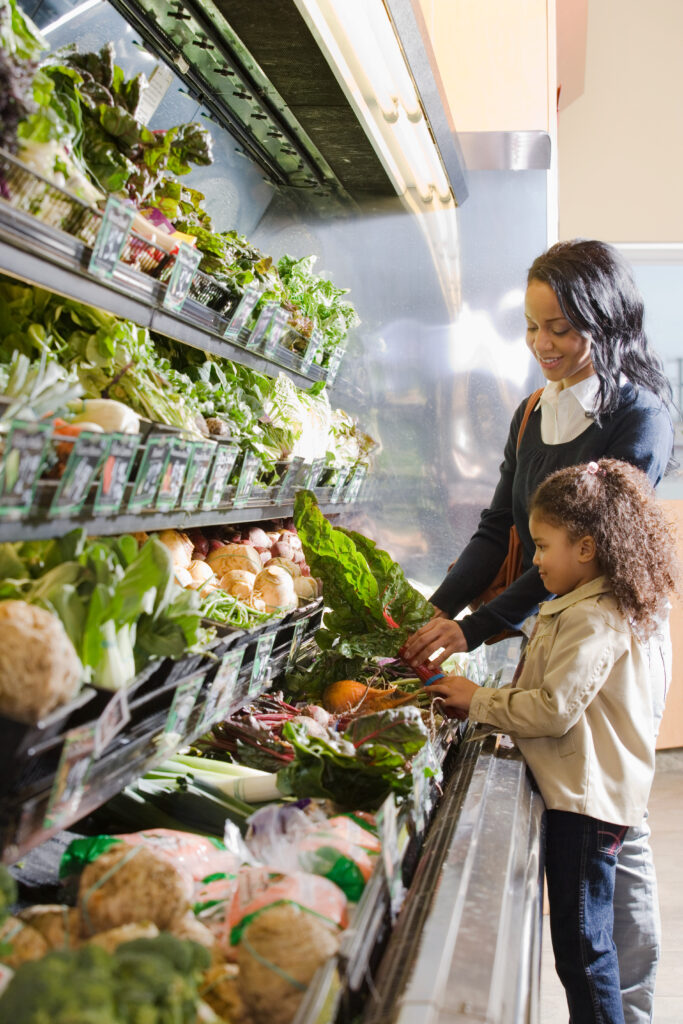
Be a Smart Shopper
Grocery shoppers make a lot of decisions in a short amount of time.
Make the right ones with these tips:
- Use a calculator and add cost as you place items in cart.
- If shopping with kids, let them track costs. It will keep them focused and help you stick to spending plan.
- Don’t overlook no-name or store brands. These items often are made by brand name companies with a different label.
- Never shop hungry. You will buy more than you need.
- Follow your list with few exceptions.
- Compare similar products and buy the most nutritious ones that cost less.
Check Cost Per Unit Pricing
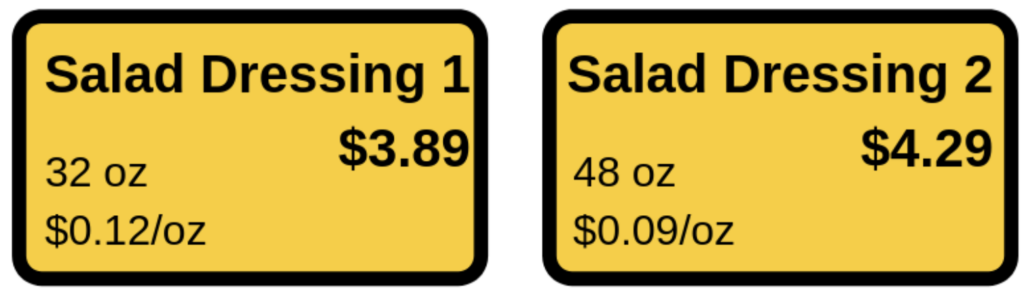
- Most grocery stores have a shelf tag with product cost per unit. Choose the lowest cost size.
- If no tag, you can calculate the cost.
- Example: One can of tomatoes weighs 16 ounces and costs $1.25. The other weighs 13 ounces and costs 89 cents.
- Divide the price by the number of units: $1.25/16 = 8 cents per ounce and .89/13 = 7 cents per ounce. In this case, the larger size costs more.
Resist Store Temptations
Grocery stores are designed to encourage shoppers to buy more than they planned. Be aware of these strategies:
- Displays at end of aisle often promote products not on sale.
- Bakery aromas make shoppers feel hungry.
- Cooking demonstrations and free samples are intended to make shoppers buy it.
- Deli and coffee bars encourage shoppers to eat while shopping.
- Candy, gum, snacks and magazines are always near the checkout. These are among the most profitable items and try to tempt shoppers while they wait.
Compare Nutrients
- Look at serving size.
- Compare the Percent Daily Value (DV) in the Nutrition Facts section of the label.
- Example: One can of pasta sauce may contain 780mg (milligrams) of sodium while another can may contain only 320. Choose lower sodium.