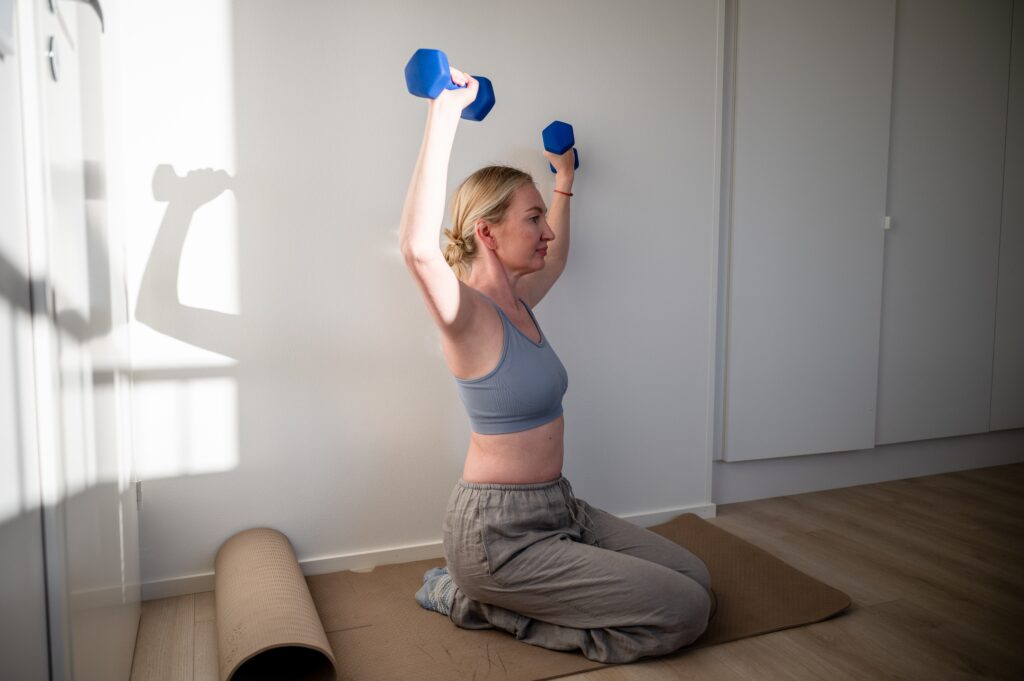
LET’S GET MOVING
Physical activity is fundamental to maintaining good health and overall wellbeing for both children and adults.
Did you know physical activity can help
you feel better the same day?
• Boosts mood
• Sharpens focus
• Reduces stress
• Improves sleep
Over time, regular physical activity can
help prevent chronic diseases, such as:
• Heart disease
• Stroke
• High blood pressure
• High cholesterol
• Type 2 diabetes
• Cancer
• Depression

Adults Need
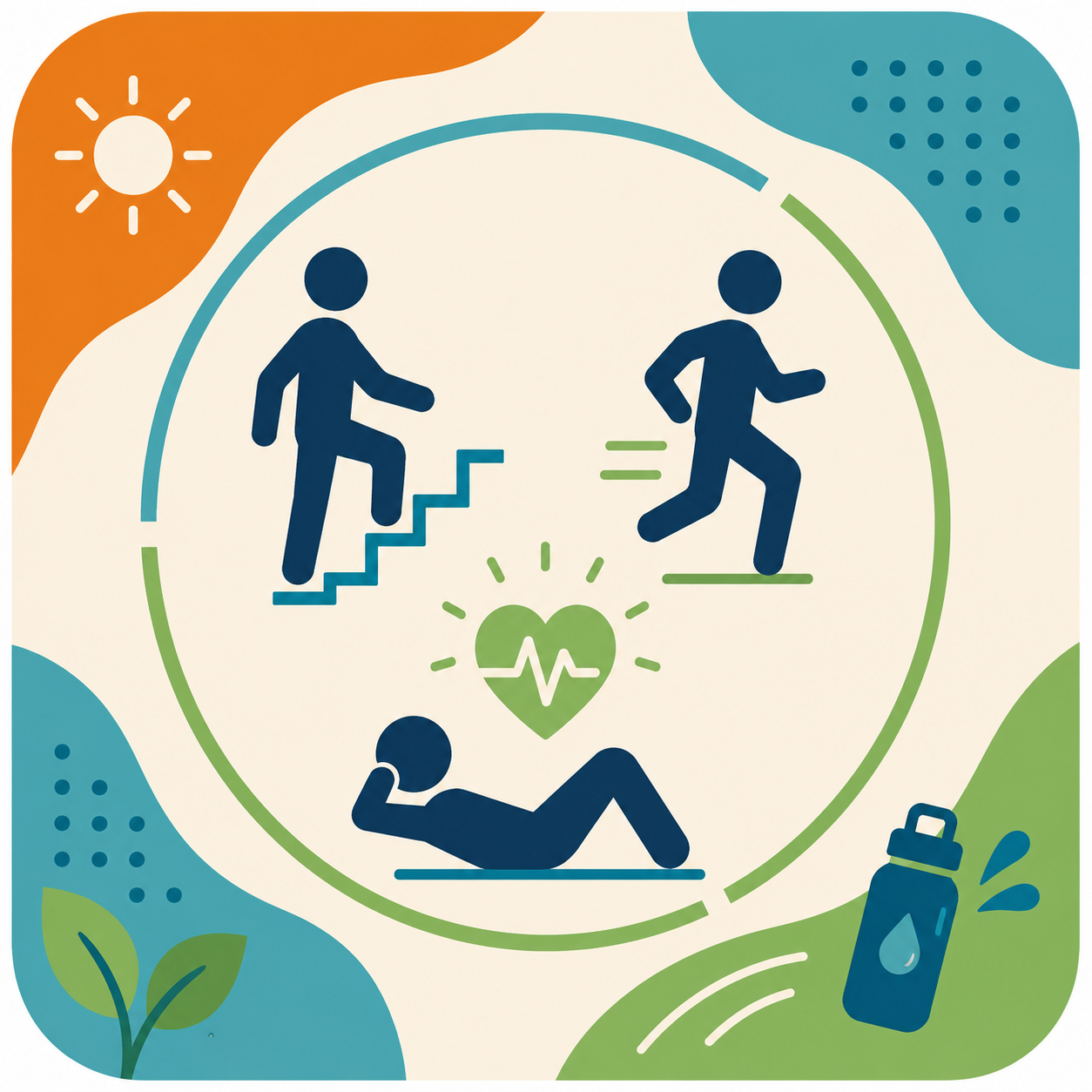
At least 150 minutes of aerobic activity (moderate-intensity activity)
per week and at least 2 days per week of muscle-strengthening activity
Children and Teens Need:
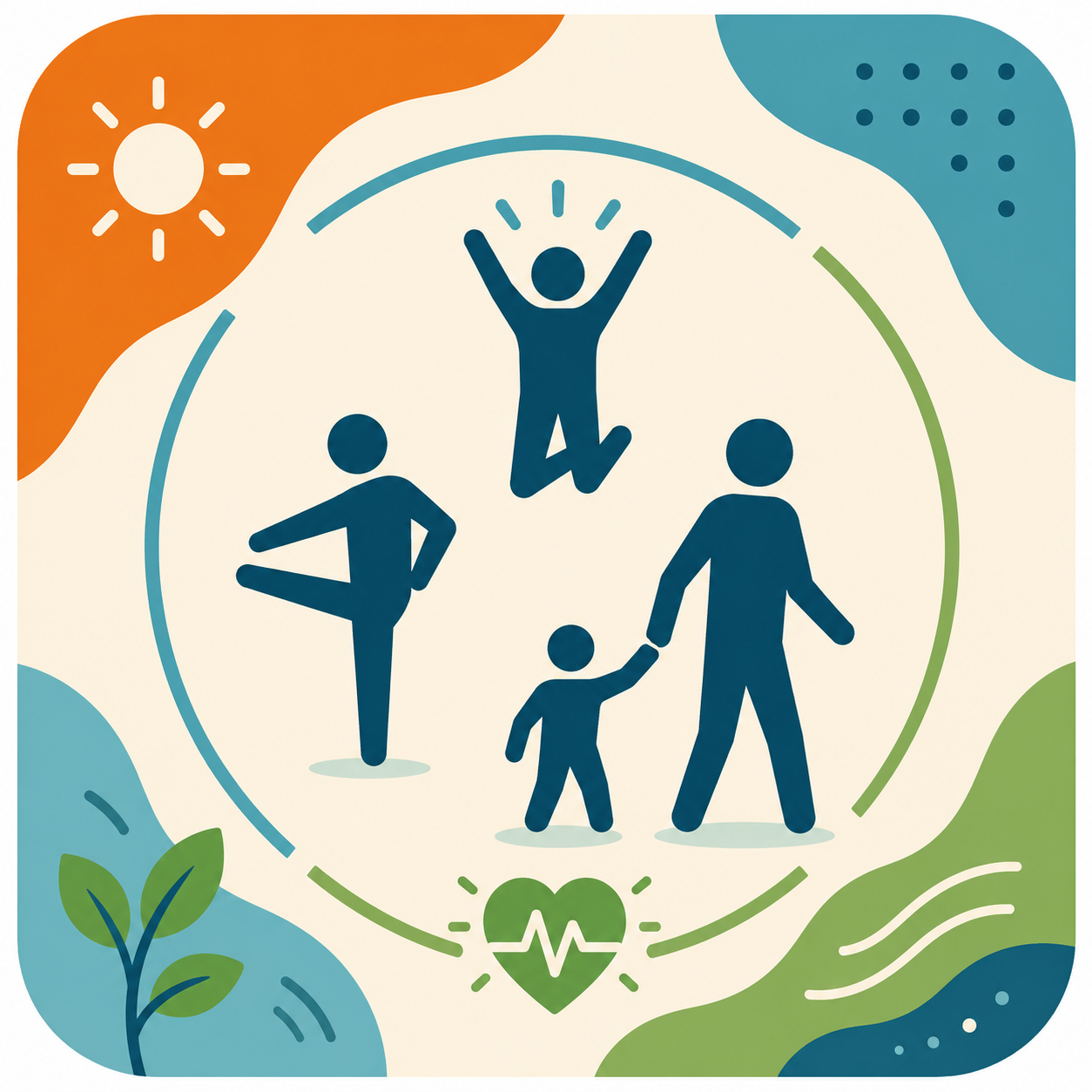
60 minutes of physical activity every day; at least 3 days should include
muscle and bone strengthening activity like jumping, climbing and running

Getting Started
- If you have current health issues, ask a medical professional for advice on safe workouts.
- If you have not been physically active,
ease into exercise. - If you experience chest tightness or pain or difficulty breathing while exercising,
stop immediately and seek medical help.

Sit Less
Sedentary time is the amount of time spent sitting, reclining or laying down. Sedentary activities include watching TV, scrolling on a mobile device, sitting at a desk or driving for extended periods of time.
Too much sedentary time can have negative effects on both physical and mental health. In addition to regular physical activity, it is important to break up long periods of sitting or lying down with frequent standing or movement breaks throughout the day.
Set yourself up for success:
Set SMART Goals
SMART is an acronym that stands for Specific, Measurable, Attainable, Relevant and Time-bound. By setting SMART goals, you can ensure that your goals are realistic and achievable within a specific timeframe. Being SMART with your fitness routine will help you stay motivated and on track as you work toward adding regular physical activity into your self-care routine.





MOVE YOUR WAY
Regular physical activity doesn’t need to involve a gym. Plenty of activities count toward aerobic and muscle-strengthening recommendations. It’s important to find activities that you enjoy the most. If you like doing it, you’re more likely to do more of it and the more you move, the more benefits you reap.
Dance

Swimming
Biking
Hiking
Play Sports

Garden
Do Chores
Play Together
Push a Stroller
Push a Wheelchair
Mow the Lawn
Rake Leaves